Showing posts with label Travel. Show all posts

Friday, July 20, 2018

Using Public Transport to travel to office


Using Public Transport to travel to office
If you are a foreign student who wants to come to the office by public transport, the following are the LRT and MRT and bus routes you can take.
Option 1
From KL to Bandar Utama – Take Sungai Buloh Line


From Bandar Utama to Office- Shuttle Bus is 
Rm1.
Stop at the Police Station and walk through the station to the office.

Options 2
Take the Sungai Buloh Line and stop at TTDI ( Taman Tun Dr Ismail)
From TTDI to the office- Take the MRT Bus


Stop at the Lorong Burhanuddin Helmi 2 and walk to the Helmi 3


Tuesday, July 3, 2018

Wau Bulan


Wau bulan on display in Pasir Gudang Kite Museum, Johor.
Wau bulan (Jawi: واو بولن) is an intricately designed Malaysian moon-kite (normally with floral motifs) that is traditionally flown by men in the Malaysian state of Kelantan. It is one of Malaysia's national symbols, some others being the kris and hibiscus. The reverse side of the fifty-cent coin of Malaysia (1989 series) features an intricately decorated wau bulan with a hummer on top.[1] The logo of Malaysia Airlines (MAS) is based on the wau kucing (cat kite).
There are many types of wau in Malaysia, each with its own specialty. Wau kucing (cat kite) and wau merak (peacock kite) are some of the variants.

Click here for more details: https://en.wikipedia.org/wiki/Wau_bulan

Why Ipoh, Malaysia, Should Be On Your Travel Radar


In the middle of the 1900s, the northwestern Malaysian town of Ipoh was the world’s largest producer of tin and its booming success showed.
Informally described by locals as the “town that tin built,” Ipoh grew from a sleepy village in the valley of the Kinta River to a hotbed of cabarets, night life and conspicuous consumption, a city fueled by the fortunes of the Chinese-mining towkays (bosses). But the collapse of tin prices in the 1980s curbed the city’s rise and soon Ipoh faded, existing primarily as a pleasant place to retire (the surrounding limestone karst mountains are beautiful and the resulting hard water is claimed to make food taste better), or as an eating stop for travelers shuttling between the mountain region of Cameron Highlands to the east and the island of Penang to the northwest.


But Ipoh, Malaysia’s third most populous city, and one largely unknown outside of Southeast Asia, is staging a comeback to become the country’s hippest destination. The city’s fortunes began to improve in 2004 when the water theme park Lost World of Tambun opened, backed by the Malaysian conglomerate Sunway Group (its founder and chairman Jeffrey Cheah Fook Ling was born close to Ipoh). More recently, in 2014, the Lithuanian artist Ernest Zacharevic, as he had done in Penang’s Georgetown, placed his imprimatur on the city by beautifying old buildings with a series of murals. But perhaps the greatest change — one propelled by homegrown talent — has been the boom in hip cafes over the last few years.

Ipoh, now, is roaring back in style.
The city, the capital of Perak state, has a core that is relatively compact, with roads largely plotted in a grid system — planners redrafted the town after parts of it were destroyed in a sweeping fire in 1892 — so it’s easily walkable. (Be prepared to sweat; year-round daytime temperatures hover around a humid 90 degrees). It also has a number of pretty shop-house and heritage buildings around the Old Town, like the Railway Museum playfully referred to by the British during the colonial era as the Taj Mahal of Ipoh.

The catalyst for Ipoh’s new tilt was arguably the Sekeping Kong Henghotel. Opened six years ago, it took the peeling bones of a hostel once used by performers at a Cantonese opera and updated the interiors with glass and steel; the effect is remarkable, modern and yet artfully dilapidated, a sensitive reimagining of a storied, decrepit space. The hotel opened on Kong Heng Square in the city’s Old Town, and was soon followed by other newcomers nearby, such as the cafe Burps & Giggles. Offering a simple menu of bar food — burgers, pizza, fish and chips — its most appealing aspect is the almost hallucinatory interior, with junk furniture, mismatched furnishings, haphazardly cobbled-together lamps and the centerpiece mural of a woman with curly red hair who seems lost in thought. It was a novel concept for a town more famous for bare-bones restaurants serving food like ayam tauge (cold chicken with beansprouts) and nasi kandar, a rice with honeyed chicken and curry sauce, locally known as nasi ganja for its addictive qualities and ability to put the diner to sleep.>>


Other businesses followed. Patisserie BoutiQue opened on the street called Jalan Sultan Yussuf with a menu of salads, soups, sandwiches, pasta and excellent desserts (the tiramisù has dense mascarpone and a strong kick of Baileys Irish Cream), and an interior with whitewashed exposed brick walls, white subway tiles, poured concrete floors and a soundtrack of old French songs.

Around the corner, Plan B is a contemporary restaurant with a high ceiling, giant windows and tile floors. The menu is international but pays homage to Malay ingredients; the spaghetti agli olio features bunga kantan (torch ginger flower), the pungent, floral plant used in the Southeast Asian dishes rojak and laksa, lending the Italian classic an Asian flavor profile.
Cafes continue to open in the town’s colonnaded shophouses, tucked between established businesses like silk shops, watch repairers and travel agents.
Chokodok (Malay for banana fritter) has accommodations above its intriguing, tumbledown, reggae-themed restaurant. Opened by two brothers who had spent some time in the islands off the coast of Peninsular Malaysia, it has tree trunks as decorations, the flotsam and jetsam of a beach shack, and music that’s consistently reggae. A former orphanage on the eastern fringe of central Ipoh transformed into Thumbs Café, an eclectically furnished restaurant specializing in Malay dishes.
M Boutique, a hotel that mixes the rustic, industrial and whimsical, became the city’s most high-style property in an area rife with used-car showrooms. When it opened “this concept was not available here,” said Joey Chong, a sales executive for the hotel. “Lots of youngsters come from Kuala Lumpur [two hours away by car or train] for the cafe hopping. It’s much easier to get around here than in K.L.”


But the trend isn’t confined to central Ipoh. A number of cool joints have sprung up in Ipoh Gardens East, a commercial and residential area near the Aeon Mall. Tea Coffee Game opened among a drab row of businesses and office buildings. It has bright interiors, Ikea furniture, and there’s a utilitarian feel to it, but its conceit is the games found throughout — traditional board games like checkers and ludo as well as a video console.

“We have games to make the place different, to help people revisit their childhood, bring them good memories for when the food is served,” Chung Kok Heung, a science lecturer at a local university and a co-owner, told me one evening. “A few years ago most youngsters here moved to other countries, but now people are coming back because they like the food, the environment, the slower lifestyle.”

Its menu, as I found often in this new breed of restaurants, focuses on Western food and includes a pretty salad served in a Mason jar, full of crisp green and purple cabbage, peppers, carrots, cherry tomatoes, and served with smooth sesame dressing. A big draw here is the all-day breakfast, with up to seven items like bacon, grilled tomatoes, eggs and hash browns, costing only 19 Malaysian ringgits (about $5). Nearby, Zakka Loft has colorful curtains; a sky mural with the words “Do You Have a Dream?”; a wall unit full of knitted soft toys (it offers workshops on how to make them); and fabulous iced fruit drinks.
These places are free from hipster posturing and have an easygoing ambiance.
Of all the cafes and restaurants I visited, one stood out. Classically trained chef Sam Lau left Ipoh in his early 20s to work in kitchens around Asia and Europe, returning to his hometown after 16 years. “I came back to my country and couldn’t find good bread,” he lamented. Thus began a mission; for two years he sold bread from his bicycle outside the restaurant Plan B.
In December 2016 he opened Artisan Handmade Bread in an old shop-house near Kong Heng Square, where he works in a small open kitchen behind the bread counter. “I am up at 3 a.m. every day, baking bread, running the kitchen. Ipoh people are old-fashioned, they like value for money.” The excellent food is a steal — the set-lunch menu (he closes for the day at 4 p.m.) includes soup, a main dish, an amuse bouche, dessert and lemon iced tea, for 28 ringgits.


Despite his background and training, Mr. Lau avoided opening a formal-dining restaurant. “The young generation doesn’t want fine dining. It wants good food and casual. I want to provide good honest food cooked right in front of you, bistronomy style. And I also want to educate locals on what goes into commercial bread and artisan bread.” His bread is outstanding, fibrous and supple, and justly anchors the menu — generous chunks served with the mixed vegetable soups, thick slices bookending the grilled sandwiches.
“Lots of youngsters leave here to come back, they want to share what they learned from overseas and show something new to Ipoh,” Mr. Lau said.
Ipoh is all the richer for it.


Thursday, June 28, 2018

World's Steepest Cable Car

Langkawi's cable car ride is one of the most unforgettable thrills we have ever experienced. This is one of the world's most awesome cable car rides. Why? Because this ride to the top of mount Mat Cincang takes you to a height of 708 meters in about 15 minutes through the steepest cable car gradient in the world and offering breathtaking views of the mountains, valleys, islands and the Andaman Sea.

The entry to the cable car is at the Oriental Village located at the foothill of Mount Mat Cincang in Patai Kok. Once you buy the tickets at the counter, you will be guided to the waiting area and move towards the cable car pedestal in a queue. The gondolas (cable cars) keep coming every half a minute or so. Each car has a capacity of six persons. 

If there is a queue, six persons will be required to get into a car. In several occasions I had the opportunity to ride the cable car all by myself. You will actually have to hop into the gondola as it keeps moving in the pedestal. 

Before it takes off, the doors will close automatically. There is a slit (small window) on top of the cabin which serves as the only ventilation. There are two sections of the ride. The first section takes you to the middle station, and the second section to the top station. The gradient or the slope in the first section is supposed to be the steepest in the world (42°). 


Langkawi Cable Car 

View from the cabin. You can see the peak  
where the middle station is located 
As the gondola starts moving up, you will feel how the temperature starts dropping quickly. You will soon get cool breeze flowing in through the ventilation slit. If you look up, you can see the middle station far way up on a ridge top, if you look down you can see the buildings of Oriental Village with their gabled red roofs and becoming tinier by the seconds... it's an awesome sight.  
The total distance covered in the ride up to the top station is about 2.1 kms. On the way you get fascinating view of the mountain flora, rain forests, valleys, waterfalls and sometimes even wildlife and many types of birds on the ridges. 

Once you reach the middle station (which is at a height of 650 meters), you can get off here or alternatively decide to move on to the top station. At both the stations there are viewing platforms to soak in the marvelous sights all around. However, the view from the top station is even better and more breathtaking. 
While leaving the middle station, prepare for the unnerving jolt in the cable car. The feeling is more scary as you come down. However from the middle to the top station the gradient is easy and the cable car essentially traverses from one peak to the other at a gentle slope. 

Langkawi Cable Car
Looking down from the Cable Car. You can see the  
islands and tiny cottages of Oriental Village
So what can you see from the viewing platforms? Actually there are two such platforms at the top station, one on the left and the other on the right of the cable car station. There are two short flights of stairs to reach up to the platforms that offer 360° views. On a clear day you will see the many tiny island scattered in Andaman sea down below, the blue waters, towering mountains, caves and overhanging cliff walls in a panoramic setting. You can also see some parts of Indonesia towards south west and Thailand towards north. 
On one side you will see the Langkawi Skybridge, a magnificent curved suspension bridge which is one of the greatest feats of engineering. You will need to walk on the bridge to believe the kind of creation it is. You get a different perspective of the surroundings as you walk over it. You can reach the bridge from the top station.


View Platform, Top Station
Below you can see the food stall 
There is a walking trail known as Sky Trail from the top station that goes down to the middle station and then all the way down to the base station and also to Seven Wells (Telaga Tujuh) waterfall. The trail goes through forested land. The entire stretch is about 2.2kms. While walking down may not be difficult, walking up can be quite arduous. 
Facilities at the Langkawi Cable Car Stations 
Plenty of activities and facilities are offered at base station and at the upper stations so that you can spend and enjoy ample time here. The base station is at Oriental Village which is full of quaint stores and eateries. There is a small cafe at the top station selling all kinds of snacks including burgers, grilled sandwiches, chicken and fish items, cold drinks etc. 
You will also find local artists offering to make a sketch or caricature of your face right in front of you. Or you can buy a photo souvenir capturing an instance of your own ride. There are small handcrafted items, souvenirs & gifts sold at the stations. One of most interesting ones is the replica of your hand that a craftsman makes with wax and you can choose the colors. You will also find kiosks for reflexology which is kind of a foot massage that you can take while enjoying the great views all around. There is a post box at the top station at an altitude of 708 meters from where you can post a letter, a postcard or a greeting card to anyone you like anywhere. There are free toilets and washrooms.


Langkawi Cable Car 
The span between Middle & Top stations

Skydome: A hi-tech 11-meter fulldome theater has been installed outdoor in July 2014. It can accommodate up to 50 persons and offers spectacular 360-degree 3D projections of galaxy, astronomy etc using 12 projectors. The shows take 10 minutes each and run between the cable car arrival and departure. It helps making the waiting time enjoyable. 

Some facts about Langkawi Cable Car 

  • The total inclined distance covered by the cable car from the base to the top station is 2.16 kms. The middle station is at a distance of 1.7kms from the base. The vertical rise to the top is 680 meters although the top station is at an altitude of 708 meters from the sea level. 

  • The haul rope has a diameter of 50-milimeters. 

  • The Malaysia Book of Records has endorsed the Langkawi cable car having the longest free span single rope of 919.5 meters. This longest free span is between the second tower and the middle station. 

  • Although the design speed is 5-meters per second, the cable car is operated at a speed of 3-meters per second. 

  • It was constructed during the period April 2001 to August 2002, and was opened to public in October 2002. Public enjoyed free rides during the first month. 

  • One way journey takes about 15 minutes (round trip 28 minutes) excluding the waiting time at the stations.


  • Tips
    ·         If there is a lot of rush, try to avoid getting out at the middle station on your way down. If you do, you might have to wait for a long time to get a gondola with vacant seats coming from the top station. They will keep coming full. Secondly, there is nothing more to see at the middle station compared to the top station.
    ·         Sometimes, particularly on public holidays and weekends, there can be a huge rush. It can also happen if there is a cruise ship at port when large numbers of passengers come here as part of cruise excursion. You will need to line up at the ticket counter (which can take some 45 minutes if there is a long queue), then again queue up at the waiting area (another 45 minutes) until you get your turn to board the cable car. So try to reach early and few minutes before the counter opens. You might be able to avoid the queue. 

    Langkawi Cable Car Entry - Ticket Counter Area


    ·         On a rush day (or even otherwise) do not release your taxi. Although taxis are available near the entrance of Oriental Village complex, on some days you won't find any. We often take a taxi on an hourly rate (RM25 per hour) whenever we visit cable car and other nearby attractions.
    ·         The cable car operation is subject to weather conditions. During inclement weather, they do not operate the cable cars. So on such days, call them up and check before you go.
    ·         If there are clouds at the top, you wont get any views or may be limited views. You can actually make it out from the ground level whether you can get good views or not once you reach the top. Ask the taxi driver and he will let you know. If it is clouded, you may decide to take the ride on some other day, and rather enjoy Oriental Village along with many of its other attractions and activities here.
    ·         On a sunny day, it is usually very hot up there. So, wear a cap, comfortable clothes and walking shoes.
    ·         Sometimes the cable car remains closed due to scheduled maintenance. Call them up and check out the schedule before you go.
    ·         Ask for a free souvenir and brochure at the ticket counter. They give you a nice badge and a foldable brochure, if in stock. 

    Langkawi Cable Car Waiting Area
     Sometimes you will find sea of people 
    waiting here for their turn

    Open Hours
    Monday to Thursday: Entry 10am to 7pm (closes by 8pm)
    Friday to Sunday (and Public Holidays): Entry 9:30am to 7pm (closes by 8pm)
    Wednesday only: Entry 12noon to 7pm (closes by 8pm)

    Indicative Rate
    Adult: RM45 per adult. Child (from 2-12): RM30. Includes Skydome. There is no time limit once you enter as long as you come out by the time it closes for the day.
    Express Ticket: RM95 per person. You can avoid the long queue at the waiting area. Includes Skydome and SkyRex.
    The above rates are for foreign tourists. Malaysian citizens with Mykad cards have lower rates.
    Combo tickets are also available combining cable car with 6D movie, duck tour, sky dome etc.
    You can also book a gondola for private ride. Costs RM460

    Location & Contacts
    Address: Langkawi Cable Car, Oriental Village, Burau Bay, 
    07100 Langkawi, Kedah Darul Aman, Malaysia
    Phone: +604 959 4225 / 1225; Email: info@panoramalangkawi.com
    Panorama Langkawi Sdn. Bhd. is the company that operates the Langkawi Cable Car.


    Wednesday, June 27, 2018

    Tiger Char Koay Teow @ Carnavon Street, Georgetown, Penang

    Char Koay Teow, being one of the quintessential dishes in Penang, can be commonly found in any of the coffee shops within the state. However, getting a good one can be really tricky. Talk to any Penangites and the topic can be heated up real quick. Suggestions like Ah Leng Char Koay Teow at Dato Keramat, Lorong Selamat Char Koay Teow, Sister Char Koay Teow or even Siam Road Char Koay Teow will be popped up but little do I hear about Tiger Char Koay Teow.

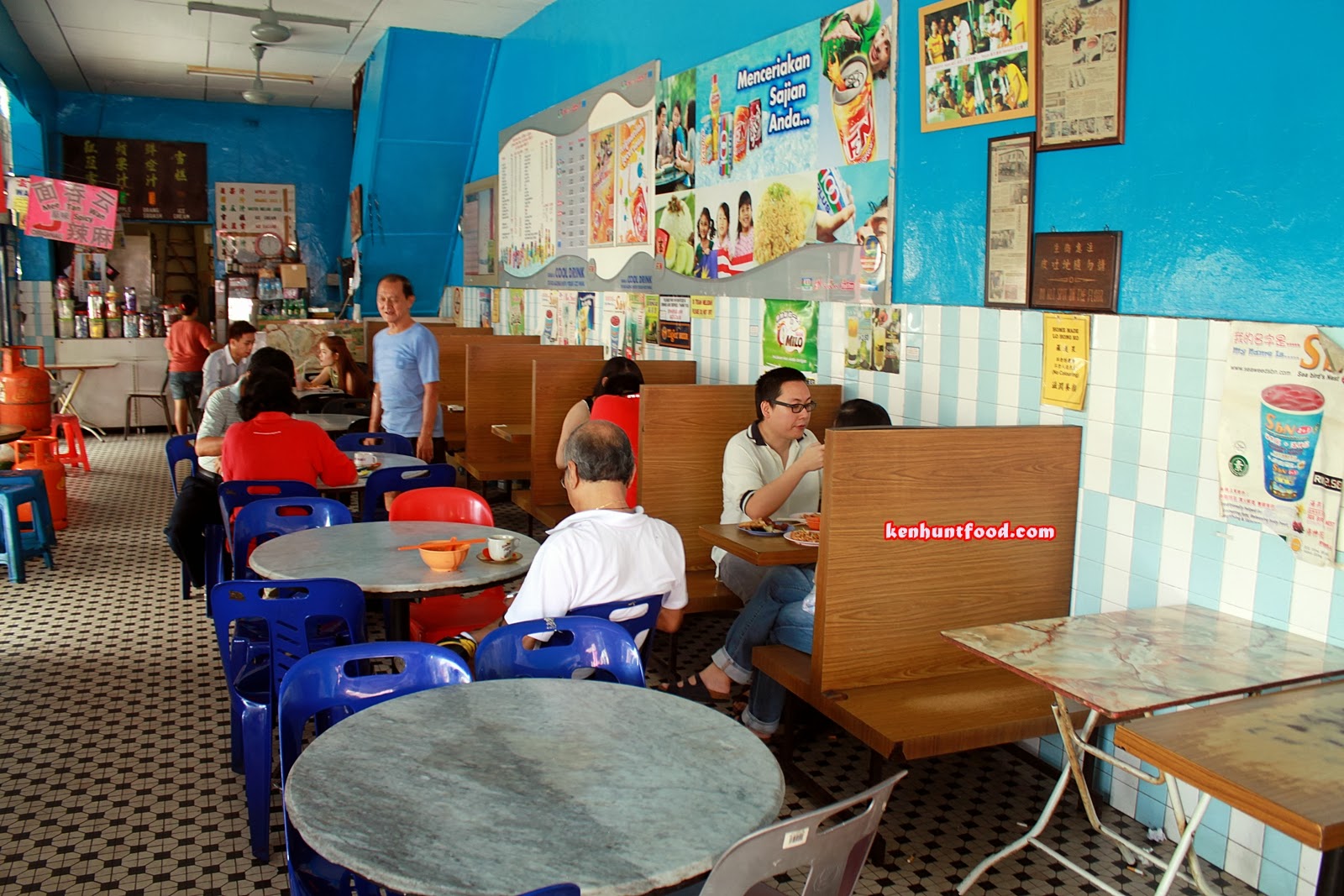
    Along the ubiquitous food street- Carnavon Street, there is this famous Char Koay Teow stall- Tiger Char Koay Teow, named after the owner "Ah Hor/ Tiger in Hokkien". It can be found in a coffee shop known as Ping Hooi Coffee Shop, sitting at the junction to Carnavon Street and Lebuh Melayu. The place will be thronged by patrons during weekends, be sure to grab your seat as early as possible or you might end up waiting for hours.


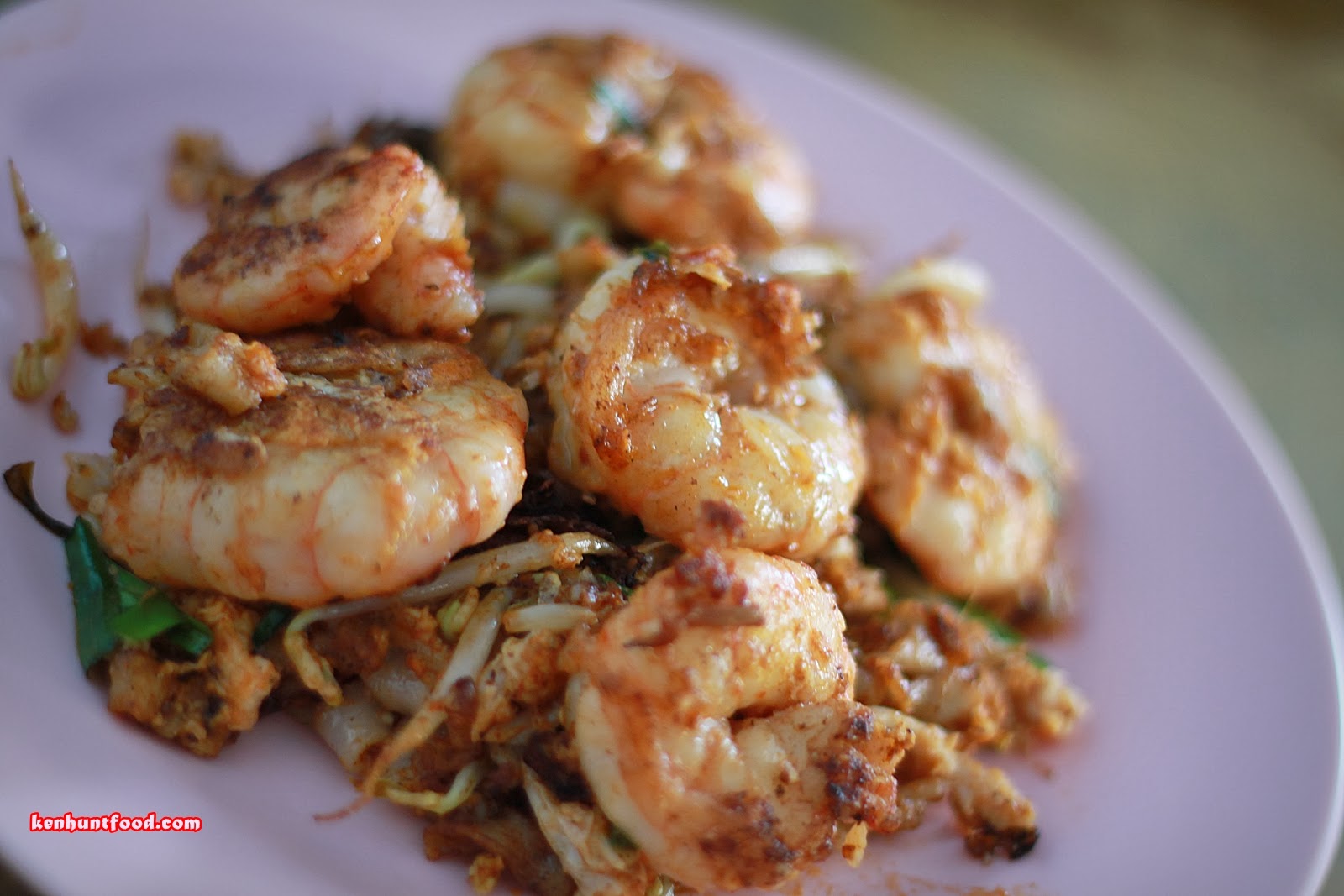
    You may go for the usual version of Char Koay Teow but I had mine with Extra Prawns added (Rm 10). Prawn lovers will be weak in the knees, 6 huge, plump and juicy Prawns were topped on the adequately stir fried Koay Teow. The magical mix of Flat Rice Noodles/ Koay Teow that possessed the standard "Wok Hei"; airy and fluffy texture for the Egg as well as refreshing crunch of Chives and Sprouts, how wrong can the dish be? The real draw of the dish was on the fresh and juicy Prawns, they were not overcooked nor hard to the bite, with a slight resilient texture, they were just perfect to complement with a plate of piping hot Char Koay Teow. However, I thought the dish could be a little spicier. Nevertheless, I thought the Char Koay Teow we had was above par and worth to be recommended.


    Ratings:
    Taste: 8/10 (1-3 bad, 4-7 average, 8-10 good)
    Price: 7.5/10 (1-3 expensive, 4-7 average, 8-10 cheap)
    Service: 7/10 (1-3 bad, 4-7 average, 8-10 good)
    Ambiance: 5.5/10 (1-3 bad, 4-7 average, 8-10 good)
    Parking: 5/10 (1-3 bad, 4-7 average, 8-10 good)
    Service Charge: No
    Government Tax: No
    Non- Halal

    Additional Information:
    Address: 179, Carnavon Street, 10300, Georgetown, Penang.
    Business Hours: 8am to 2:30pm. Opens Daily.
    Contact Number: 6016- 458 0926


    Source from http://www.kenhuntfood.com/2013/12/tiger-char-koay-teow-carnavon-street.html


    Tuesday, June 26, 2018

    Malaysian Food is Better Than Singaporean Food, Period

    I used to be just like you. Young, foolish, with an unwavering belief that our food—Singapore’s food—was the best there was, unbeatable in every way, shape, and form.

    Who can blame us though? Not only have we made a national sport out of eating, even the likes of Gordon Ramsay and Marco Pierre White have raved about our food and hawker culture.

    And yet, it took just one trip to Ipoh to change my mind.

    It all began rather innocently when The Haven, a luxury Eco Resort in Ipoh invited me to spend my Vesak day long-weekend with them.

    First, I screamed. Then I said yes.
    Barely three hours after leaving Singapore, I find myself in Ipoh’s famed Nam Heong Eating House.

    It’s a busy, crowded place, with chewing, chattering, and clinking cutlery echoing off the high, dusty ceilings and white-tiled walls. Waiters, with trays piled high with food struggle to navigate the never-ending sea of customers streaming in for lunch.

    To my right sits a pair of Singaporean-looking men, tucking into plates of char siew pau and cups of frothy brown coffee.

    To my left is Ronald (Ron for short), a man in his fifties and who also happens to be the guest relations officer at The Haven. We had gotten chatting in the lobby when I was on my way to Nam Heong, when I discovered that because he did shift work, he can essentially be free at certain times of the day.

    Since I was travelling alone, I asked if he would join me for lunch. He readily agreed, and later I understood why.

    At Nam Heong, Ron goes wild.

    First he orders five small plates of dim sum followed by a plate of char kway teow. Soon after comes a dish of curry prawn mee with shredded chicken. After several minutes, two rolls of popiah join the now-cluttered table.

    Just when I’m sure that the table (and my stomach) has run out of space, a waiter arrives with two cups of Ipoh’s famous white coffee.

    The total cost? SGD $6.65 per person.

    Now hawker food in Singapore may be relatively affordable, but even I know $6.65 can’t get you that much.  

    Did I also mention how great the food was?

    It was great. Really great. Really really great. 

    The yam puffs (SGD $1.50 for two) were better than any I had in Singapore—crispy on the outside, mealy on the inside. The egg tarts (SGD $1.50 for two), with their painstakingly layered tart shell and soft, sweet eggy center, put my usual favourite ones from Swee Choon to shame.

    Although I prefer my char kway teow (SGD $2) blackened with soy sauce, I was surprised to find that Ipoh’s ‘healthier’ version with no sauce and twice as many eggs was no less tasty. In fact, without soy sauce, it became all about the wok hei.

    While I remain ambivalent about the prawn mee (SGD $2), I am convinced that Ipoh’s popiah (SGD$1.60 for two)—paper thin skin, juicy filling, crunchy centre (thanks to the addition of lard, deep fried onions and garlic)—is better than anything Singapore has to offer.

    And finally, the coffee.

    Ipoh’s white coffee is perhaps its most famous export—resulting in the town being named one of the top three coffee towns by Lonely Planet. Dating back to the 19th century, Ipoh’s Arabica coffee beans are roasted with palm oil margarine, laced with condensed milk and “pulled” to achieve a creamy head of froth.

    Nearly every coffee shop in Ipoh worth its salt has its own take on white coffee, and Nam Heong is no exception.

    The drink (SGD $2) is creamy, rich and glides right down my throat. It’s sweet, but well balanced with a bitter aftertaste. In all honesty, it resembles a decadent dessert much more than it does a regular Kopi.

    Malaysian Food: 1
    Singaporean Food: 0

    The city of Ipoh rests comfortably within the state of Perak, two hours from Kuala Lumpur with its Hainanese Tea and Chilli Pan Mee, and one hour from George Town, Penang, with its Assam Laksa and Koay Teow Th’ng.

    As for Ipoh, it has all the culinary hallmarks of its neighbours, and more—an advantage, research suggests, of being a major land transportation hub within West Malaysia.

    It’s for this reason that you can find one of the most eclectic mixes of food within Ipoh’s eating houses.

    In one coffee shop for example, you can find Chinese Guilinggao, European Crème caramel (or caramel custard pudding), Indonesian satay, pork innards, and Ipoh Kai See Hor Fun. 


    In another, you can find Fujian Mee Chiang Kueh (or peanut pancake), Hongkong-style Chee Cheong Fun, and an American-style ice cream soda with red syrup.

    As I was feeling a little laid back on the second day of my visit, Ron—who by this time had become my unofficial tour guide—recommended that I have lunch at the The Haven’s Cuisines Restaurant.

    While I’m typically opposed to eating ‘hotel food’ when in a foreign country, I was surprised to find that the food served was even better than what I had the previous day.

    After witnessing the table beside me order Fish and Chips (made from perfectly battered and salted fresh grouper fish) and Cheese Spaghetti Carbonara (cooked to al-dente perfection), I was tempted to go Western with my food choices.

    Eventually, I opted to go Asian, and the two of us ordered The Haven Chicken Rice, the resort’s specialty, served with regal chicken and crunchy bean sprouts. And as I was still feeling hungry, I ordered the Singapore Laksa, a unique fusion of curry and laksa flavours with thick vermicelli noodles. Ron, following suit, ordered The Haven fried rice, which came with two large, fresh prawns.

    I could feel the waistband of my pants slowly begin to tighten, but it was worth it.


    Ipoh’s everyday dishes reflect the mashup of cultures that have shaped the cuisine of the island. British colonisers, Japanese invaders, Buddhist monks, hungry tin miners, and Chinese millionaires have all passed through the city, leaving their mark on everything from the architecture to the food.

    The locals however, tend to attribute their good food to more geological rather than geographical reasons: Mainly Ipoh’s famous limestone landscape.

    “It’s the minerals in the water,” says Ah Wong, a worker at the Go Chin Pomelo Nature Park. After our sumptuous lunch, Ron had recommended I come to the 30-year-old farm to taste one of Ipoh’s most famous produce.


     “Because the pomelos are grown near a hilly area, the water and soil collects minerals from the limestone.”

    This, Ah Wong claims, is what gives the fruit a “natural and richer taste”.  

    Now this doesn’t mean the pomelos are overwhelmingly or artificially sweet like Singapore’s pomelos tend to be. Rather, they have a fruitier, more fibrous taste, and are significantly juicier.

    Taste and minerals aside, I find myself deriving more pleasure from the visually arresting appearance of limestone.

    Unless you live along Bukit Batok near Little Guilin, it’s not everyday when you get to fling open your windows and find yourself greeted by a impressive rock formation.

    Fortunately, Ipoh has hundreds of such formations. At The Haven alone, three gorgeous (not to mention sizeable) limestone outcrops sit around a natural freshwater lake within its compounds.

    And so the morning before I set off for the pomelo farm, I leave my 3-room suite and settle happily by the seahorse-shaped infinity pool with my breakfast—a kaya puff that I’d bought the day before.

    Like many others, I’m a firm believer that you eat with your eyes. So whether it’s a rainbow-coloured freakshake, a beautifully crafted plate, or a spot by the pool overlooking a 240 million year old limestone karst, I can appreciate it.

    “Out with the old, in with the new.”

    Though our heritage boards may dispute it, this is Singapore’s ethos as most locals have come to know it. It’s a reality aligned with our first-world priorities, urban attitudes, and economic success.

    Yet there’s something incredibly one-dimensional and unsettling about a city that’s continually being torn down, rebuilt, and re-painted.

    Ipoh, on the other hand, is nothing like this.

    Unlike it’s more developed cousins, Ipoh manages to straddle the old and the new.

    Despite being branded by the country’s tourism board as the “Hipster capital” of Malaysia, Ipoh has managed to retain its sleepy-town vibes, which is embodied by its aged shop houses, dusty roads, and disorderly traffic.

    This is no more evident than on the night Ron and I step out for supper.

    We drive for 15 minutes before arriving at an unassuming coffee shop. “Get the Rojak. It’s not served at The Haven,” Ron instructs before heading off to find us a seat.

    The Rojak stall, when I find it, is small and nondescript, managed by just one young lady. As she prepares an order, I hover quietly behind her, watching as she deftly slices pieces of cucumber, pineapple, green mango, and turnip into chunks before dropping them into a large, brown bowl. Then she adds a dollop of sweet sauce, a dash of chilli, a generous sprinkling of peanuts, and begins to mix.

    After transferring it all to a plate, she finishes off the large gooey mass with a handful of crunchy prawn crackers.

    1 minute, 7 ringgit, and a large plate of Rojak later, it’s time to locate Ron.

    I find him not in the coffee shop but instead sitting at a table in the middle of a large grass field. Surrounding him are 20 or so other tables of customers (mostly men) drinking, eating, laughing, and talking.

    Across the street, a projector—the kind we used to use back in primary school—screens a Cantonese Opera film onto the surface of an empty billboard.

    If this were Singapore, this would be Hipster Hang Out #1 with fairy lights, lounge music, and wooden pallets for tables.

    Here in Ipoh, it’s uncles, “frozen” beer, Cantonese Opera and ants up my leg. It’s simple, unpretentious, and authentic—you know, authentic in the the truest sense of the word.

    Bathed in the moonlight and glow of the street lamps, surrounded by uncles three times my age, I realise that this is how Rojak is meant to be eaten. 

     Several hours before my flight home, Ron suggests we head to Chendol Wawasan for a mid-day dessert. This is despite the dark clouds that have just started to gather.

    As we pull up alongside the makeshift street cart in the middle of literally nowhere, heavy droplets of rain begin falling from the sky. Unfazed, Ron leaps out and orders two bowls of chendol “with everything and with extra gula melaka [palm sugar syrup].”

    The seller moves at lightning speed, concocting a heavenly combination of shaved ice, coconut milk, gula melaka syrup, sweet corn, thick slivers of green jelly, atap chee, sweetened azuki beans, and thinly sliced jackfruit.

    At no point does he dawdle, hesitate, or even stop to think about what he’s doing. Why would he, when chendol is the one thing he’s been making for the past 19 years?

    When I ask if he’s ever considered expanding his business or doing something else, he laughs and shakes his head.

    “I only know chendol. I only like chendol. I only make chendol.” 

     That’s when it hits me.

    Malaysian food is superior to Singapore’s because our hawkers are simply too diversified.

    In Singapore, it’s seldom you find a store that sells only one type of mee pok, one type of laksa, or one type of ban mian without the various different iterations or add ons.

    Malaysian (street food) hawkers, however, focus on doing just one thing right. So whether it’s spending 16 years just cooking the perfect plate of carrot cake, the smoothest tau huey with ginger syrup, or the tastiest bowl of penang assam laksa, they do that.

    Clutching our bowls of chendol-goodness, Ron and I squeeze with three other customers under a tiny makeshift shelter. I’m shivering from the wind; my lips, mouth and hands are freezing from the chendol and I can feel rain droplets on my back.

    Still, wedged between a weekend full of good food and a long flight home, it hit the spot.

    Sources from: http://ricemedia.co/culture-food-malaysian-food-is-better-than-singaporean-food-period/